
Three formats, different routines
| Format | Application | Tradeoff |
|---|---|---|
| Liquid | Spread a small amount; let it dry fully. | Lower airborne dust during application, but drying takes time. Formulas differ. |
| Block | Rub the block where you want coverage. | Controlled application; the block can still crumble and make dust. |
| Powder | Apply from a container in small amounts. | Quick to reapply, with more opportunity for spills and dust. |
These format tradeoffs are described in Friction Labs’ chalk comparison, written for climbing. We use them here as an application comparison, not evidence that its product-performance claims apply to Summit chalk or to lifting.
What is in the Summit bundle?
The $16 Chalk Bundle includes liquid chalk (2 oz / 60 mL), a chalk block (2 oz), and powder chalk (net 2 oz).
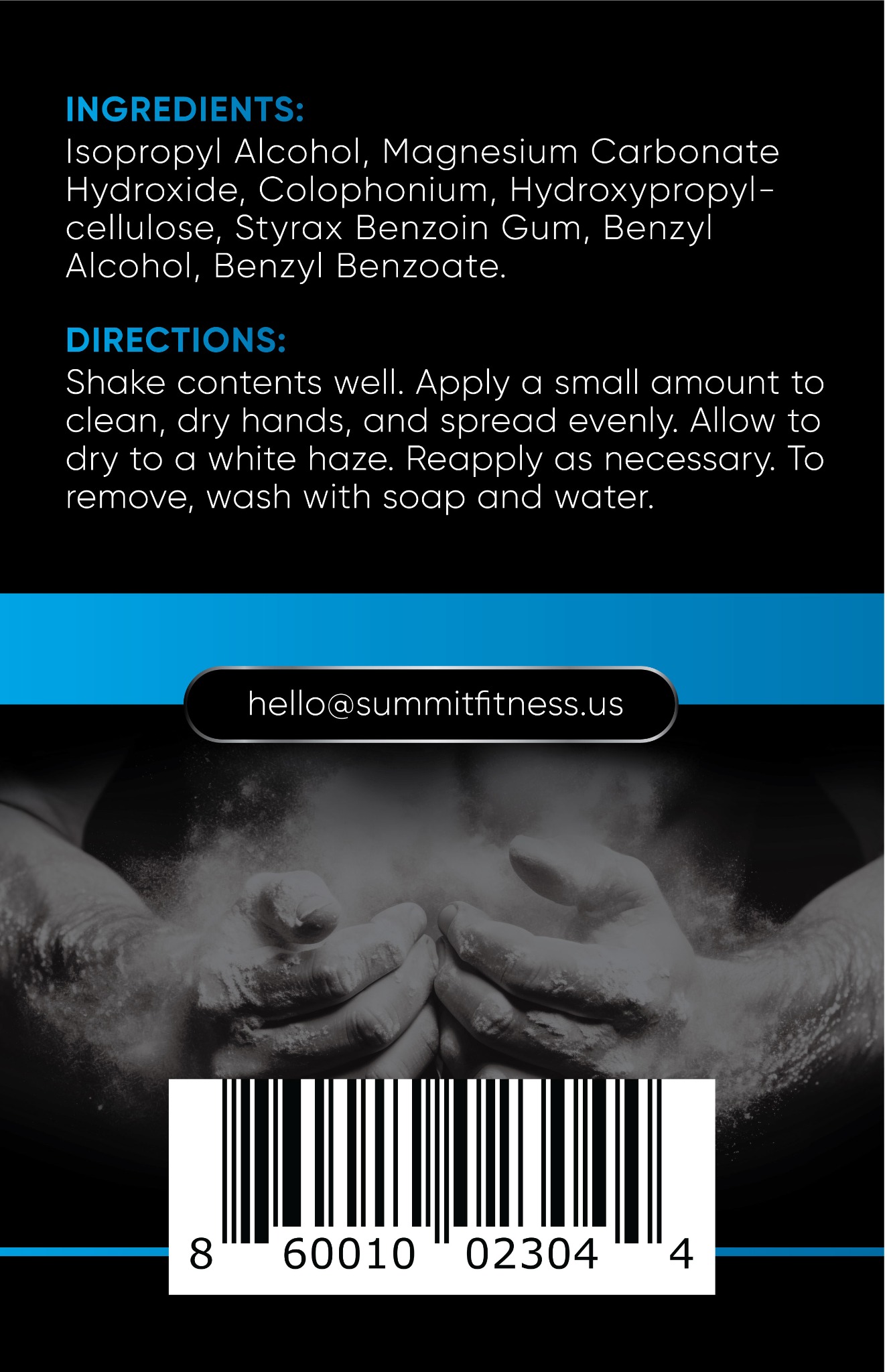
Liquid chalk: follow the label
- Shake well.
- Apply a small amount to clean, dry hands and spread evenly.
- Allow it to dry to a white haze before touching equipment.
- Reapply as needed; wash off with soap and water.
The label lists isopropyl alcohol, magnesium carbonate hydroxide, colophonium, hydroxypropylcellulose, styrax benzoin gum, benzyl alcohol and benzyl benzoate. This is not an alcohol-free or rosin-free formula. Check ingredients and your gym’s chalk rules rather than assuming every liquid chalk is interchangeable. Read the supplied Summit liquid-chalk label.
Block and powder
Keep a tray or container under your hands while applying. Start with a small amount instead of covering your whole training area in excess chalk. Close the container after use. These are practical housekeeping suggestions, not measured performance comparisons.
Choose for your space
- You want less loose powder around the rack: consider liquid, and allow drying time before the set. “Lower dust” does not mean no residue.
- You prefer rubbing chalk onto specific areas: try the block over a tray.
- You want quick reapplication: keep a small powder container within reach and use only what you need.
- You train somewhere with chalk restrictions: ask which formats and ingredients are allowed before bringing the bundle.
You do not need to use all three in one workout. Compare one format at a time so you can tell which application you prefer.
If chalk is making a mess
Liquid is still wet: give it time to dry; adding more before it dries does not solve that problem. The label specifies a small amount, not a thick coating.
Powder covers the floor: move application over a container, reduce the amount and skip clapping it into the air.
The bar has white buildup: clean the knurling using your bar manufacturer’s method. Do not apply liquid chalk directly to the bar as a substitute for cleaning. See how to clean chalk from knurling.
Prepared by Summit Fitness from the linked manufacturer guidance and supplied product labels. No hands-on comparative testing is claimed. Manufacturer guidance can change; check the current instructions for your equipment.
← Back to all guides